



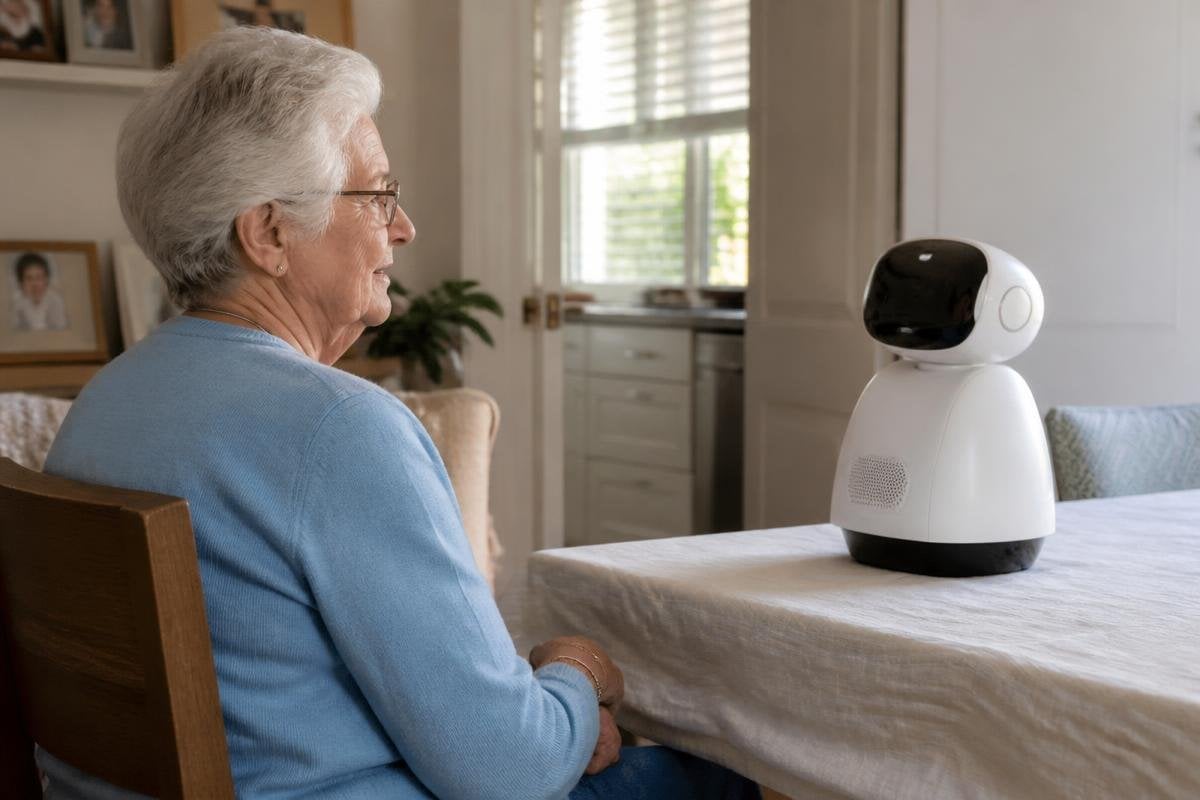
A social robot can speak, listen for a reply, and offer a routine at home. That may help a lonely person through a quiet hour, but it doesn’t show that the robot has reduced loneliness over time.
This question needs a clear test. A friendly conversation in a product demo measures one moment; a useful care system must work across days, changing moods, missed replies, and real homes.
Quick read
- Social robots may help with routine, prompts, and brief conversation.
- Loneliness is a human feeling, so robot use alone can’t prove improvement.
- The useful test is change over time, with a person still connected to other people.
What a social robot can do
The robot’s role depends on its software, sensors, and link to a person or care team. It may answer spoken questions, remind someone about an activity, lead a simple exercise, or offer a repeated conversation pattern.
Those tasks matter when loneliness grows from long stretches without contact. A prompt to call a family member can create a real exchange. A short conversation may also help someone start a daily routine, especially if the robot works at the same time each day.
The limit is plain: a robot can produce a response, but it doesn’t share a person’s life. It can’t replace a friend, a nurse, or a family visit. Its value must come from the action that follows the interaction, not from speech alone.
What a useful test would measure
A study or care trial would need more than the number of conversations. It would need a starting measure of loneliness, a set period of robot use, and a later measure using the same questions.
The setting matters. A robot used by one person at home may have a different effect from a robot used in a care home, where staff and other residents are nearby. The trial should also record how often people choose to use the robot, how long sessions last, and when they stop.
A lower loneliness score would still need careful reading. The change could come from a new routine, more calls with relatives, staff visits, or other care changes during the same period.
Without that context, the robot gets credit for work done by people.
A loneliness claim needs more than a robot speaking on screen. The record should show the care setting, time spent with people, task, and measured change in mood or contact. Social robot reports from Robot24.com can tie those details to named machines before the next section tests where the claim can fail.
Where the claim can fail
A robot may talk too much, misunderstand speech, repeat itself, or stop working when its network drops. Those faults can make a person feel ignored rather than heard. Privacy also matters when microphones or cameras operate in a private room.
The buyer needs to ask who controls the recordings, how long data stays on the system, and what happens when the robot cannot answer. A care provider should also plan a human response for distress, missed check-ins, or a sudden change in behavior.
I’d treat a social robot as a tool for contact and routine, not as a substitute for a relationship. That view leaves room for real value while keeping the claim within what the machine can do.
A decision guide for a pilot
Before buying or testing a social robot, check these points:
- Name the task: Choose one job, such as a morning reminder or a call prompt.
- Set the period: Pick a fixed trial length and record use each day.
- Measure the person: Ask the same loneliness questions before and after the trial.
- Track human contact: Record visits, calls, group activities, and care changes too.
- Plan for failure: Decide who responds when the robot misses a check-in or causes concern.
- Check data rules: Confirm what the robot records, where it goes, and who can view it.
A social robot may help when it leads to routine, conversation, or contact with another person. The open question is whether those effects last after the novelty fades. Until a trial shows that change with clear measures, the careful claim is “may help,” not “reduces loneliness.”