



Why White Oak Is a Strong Choice for Modern Stair Projects
Material continuity has become an important consideration in residential flooring and staircase design. When hardwood floors connect multiple levels of a home, the staircase often becomes one of the most visible transitions between spaces. For flooring dealers, contractors, builders, and designers, specifying white oak stair treads can provide a practical way to coordinate hardwood surfaces while maintaining the clean, natural appearance many residential projects require.
White Oak Fits a Wide Range of Interior Styles
One reason white oak remains a popular material in residential projects is its visual flexibility. The wood typically has a visible grain pattern and a relatively neutral appearance, which allows it to work with many flooring and interior design directions.
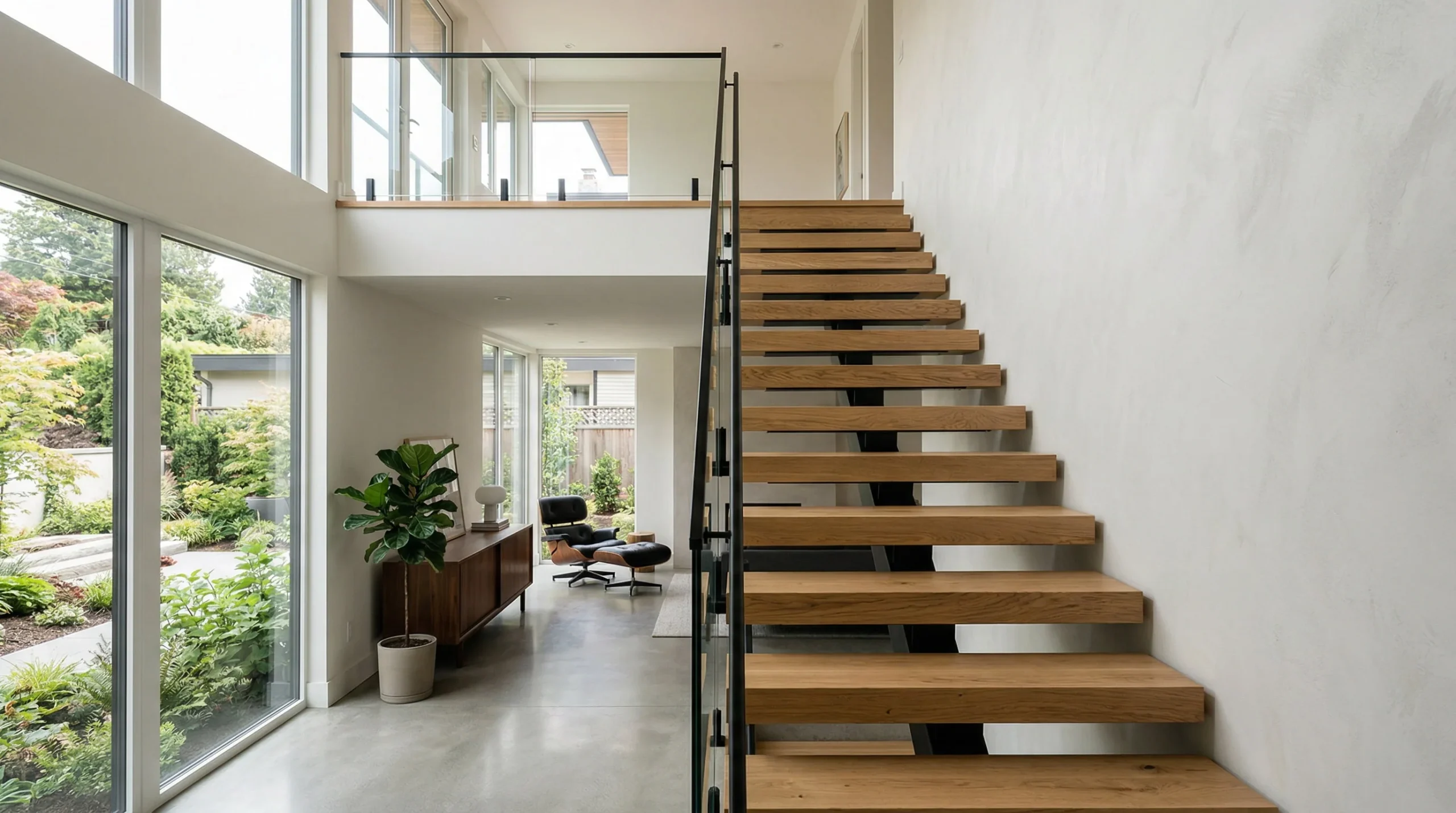
In contemporary homes, white oak can support light, natural color palettes. Designers may pair it with white walls, simple rail systems, stone surfaces, or matte metal details.
In transitional and traditional interiors, the same wood species can take on a different appearance through the choice of finish and surrounding materials. Warmer stains, painted risers, and detailed railings can shift the character of the staircase without changing the underlying wood species.
This flexibility is valuable for trade professionals working across different project types. A material that can suit multiple design directions may be easier to specify when flooring, cabinetry, and architectural finishes are still being finalized.
Stair and Flooring Coordination Should Start Early
One common mistake in residential remodeling is treating the staircase as a separate design decision after the flooring has already been selected.
The problem with this approach is that the staircase often sits directly beside the main flooring surface. Differences in grain, species, and color can become highly noticeable.
Flooring dealers and contractors should ask about the staircase during the early stages of a hardwood flooring project. Is the existing staircase carpeted? Will the homeowner keep the current treads? Is the goal to closely coordinate with the new flooring or create intentional contrast?
These questions can help define the material requirements before installation begins.
Exact color matching may not always be possible, particularly when existing hardwood has aged or received a different finishing process. However, working with the same wood species can often create stronger visual continuity because the natural grain characteristics remain more closely related.
Stair Materials Have Their Own Installation Requirements
Although stairs may be connected visually to the flooring, they should be evaluated as a separate installation area.
Each tread must fit the existing staircase dimensions. Older homes may have minor width differences between steps, while remodeling projects can uncover uneven substrates, old adhesive, or damaged surfaces.
Nosing design is another consideration. The front edge of the tread is an important visual and functional detail, and its profile can affect the overall appearance of the staircase.
Installers should also examine landings, the top stair transition, and the relationship between the staircase and nearby flooring. These areas can require additional planning that is not part of a standard hardwood floor installation.
Reviewing the staircase before ordering materials gives the installer a clearer understanding of the project conditions and reduces the risk of discovering major fit issues after work has started.
White Oak Can Support Clearer Design Decisions
For architects and interior designers, wood species selection affects more than the staircase itself.
White oak may appear in flooring, cabinetry, wall details, furniture, and other architectural features. Using related materials throughout the home can create a more connected visual direction.
However, not every white oak surface needs to look identical.
Designers may choose a natural finish on the staircase while using a slightly darker tone on the flooring. Painted risers can create contrast between the horizontal and vertical stair surfaces. Railings may introduce black metal, painted wood, or another hardwood species.
The important factor is that these decisions are made intentionally.
When stair components are selected early, designers can compare the material with flooring samples, paint colors, railing finishes, and other visible surfaces before the project reaches the installation stage.
Contractors Benefit From Better Material Planning
For remodeling contractors and stair installers, material clarity can support better project coordination.
A staircase may involve flooring crews, finish carpenters, painters, and railing installers. When the tread material is undecided, other work may be delayed or completed in the wrong sequence.
Early product selection helps contractors establish a clearer order of work.
It also makes client communication easier. Homeowners may focus on the final appearance without fully understanding the installation conditions involved. Showing material choices and explaining how the staircase will relate to the flooring can reduce uncertainty.
Flooring retailers can support this process by asking customers about stairs when discussing hardwood projects. Even when the original purchase is focused on flooring, the staircase may become part of the same renovation once the homeowner sees how closely the two surfaces are connected.
Consider Wear and Natural Wood Variation
Staircases receive repeated foot traffic, so appearance should not be the only material consideration.
Regular cleaning and proper care can help reduce the effects of dirt and grit on the finished surface. Homeowners should follow care instructions that match the finish applied to their stair components.
Natural wood variation should also be expected. Grain patterns and tone can differ from one piece to another. These differences are part of the material rather than a manufacturing defect.
Lighting can further affect how white oak appears. Natural daylight, warm artificial lighting, and surrounding wall colors may all influence the perceived tone of the wood.
Setting realistic expectations before installation helps clients understand how natural hardwood will look in their specific space.
Make the Staircase Part of the Material Plan
White oak can be a strong material choice for residential stair projects because it works across a broad range of design styles and can coordinate naturally with many hardwood flooring plans. Flooring dealers, contractors, builders, and designers should consider the staircase early so material, installation, and visual decisions can be addressed together. For prefinished hardwood stair components and project-specific product options, visit Wood Stair Co and review the materials available for upcoming stair and flooring projects.