


A staircase is viewed as one architectural composition, although it contains many parts. Selecting wood stair handrails without considering balusters, newel posts, treads, and nearby finishes can create mismatched proportions. Designers, architects, dealers, builders, and installers should establish a common visual direction before selecting components.
What Is the Main Design Direction?
Begin by defining how the staircase should relate to the home. Broad style labels can help, but the team should identify the specific characteristics that matter.
Possible directions include:
- Simple forms with limited ornament
- Strong wood grain and warm color
- Painted components with a stained rail
- Dark wood paired with black metal
- Light wood with slender balusters
- Detailed newels and shaped profiles
- A restrained palette connected to the flooring
This direction gives each professional a shared basis for comparing parts.
How Should the Handrail and Newel Posts Relate?
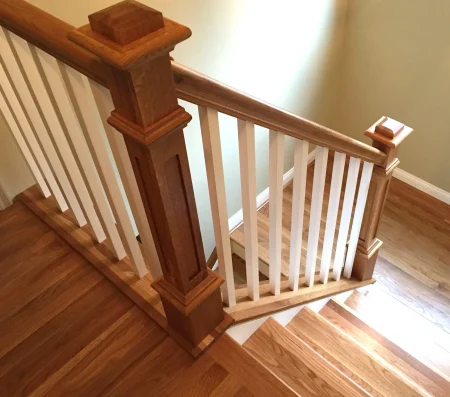
Newel posts anchor the beginning, end, landings, and turns. The connecting handrail should have a related scale and level of detail.
Review the following relationships:
- Overall scale: A broad handrail usually needs a post with enough visual weight to support it.
- Edge treatment: Rounded, eased, or carved rail details should relate to the post design.
- Top connection: The rail should meet the newel in a planned and visually clean way.
- Finish direction: Matching, contrasting, or painted components should follow a clear pattern.
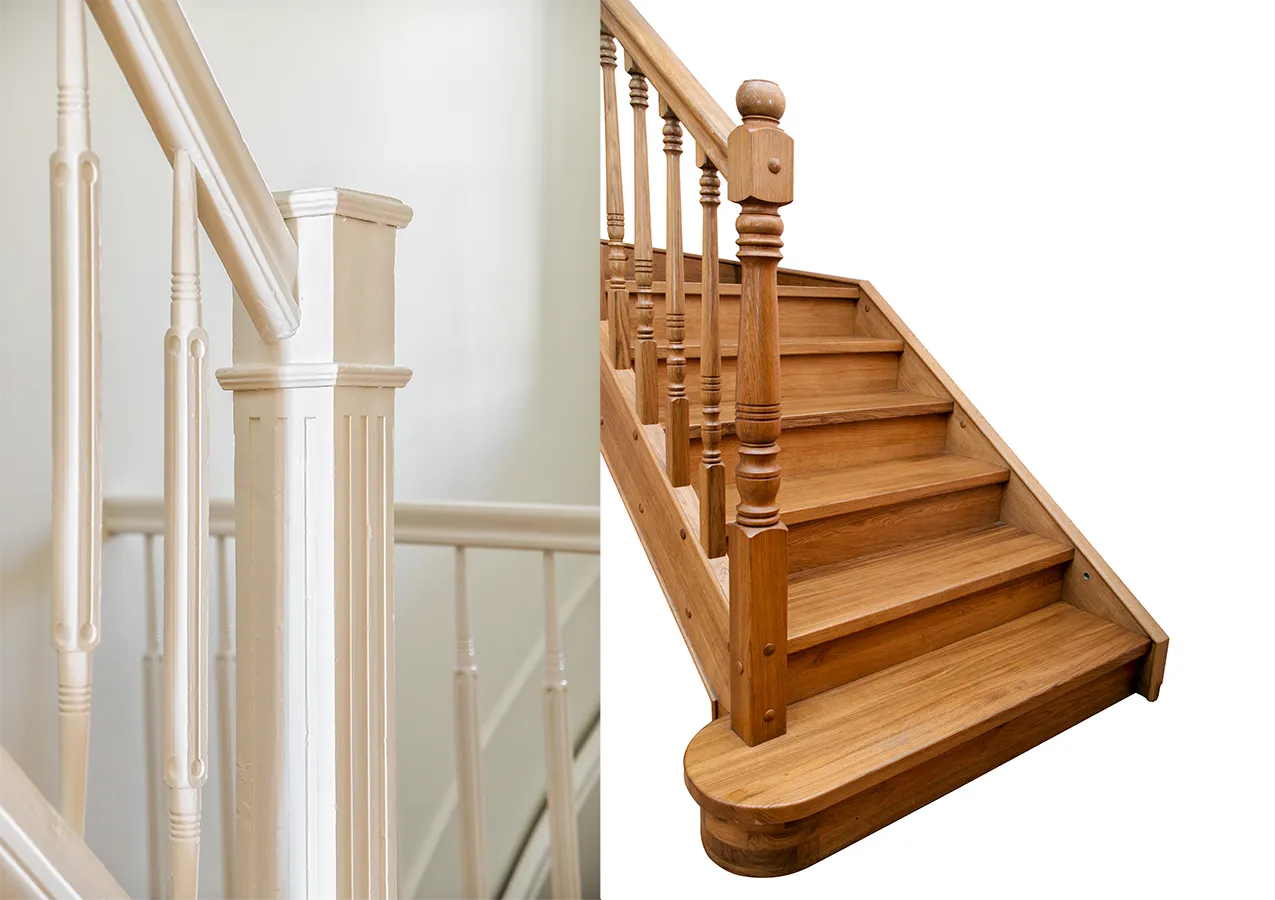
- Repeating shapes: Square, turned, fluted, or curved details should not compete with one another.
A large decorative newel paired with a slight rail may look disconnected. Physical samples or full-size drawings help the team judge proportion.
Which Baluster Material Works with a Wood Rail?
Wood stair handrails can work with several baluster materials, each with different visual and connection considerations.
Wood Balusters
Wood balusters can match the rail, painted trim, or a two-color treatment. For stained parts, compare species, grain, color range, and sheen.
Metal Balusters
Metal provides clear contrast. Baluster shape and spacing determine whether the staircase appears restrained or decorative.
Painted Balusters
Painted balusters emphasize the stained rail and can connect with risers, trim, and wall colors.
Glass Panels
Glass reduces visual interruption, but channels, clamps, supports, edges, and cleaning access require planning.
Should the Handrail Match the Treads or Flooring?
The handrail may match the treads closely, connect with nearby flooring, or provide a darker contrast. Each approach can work when it is repeated consistently.
Compare samples for:
- Wood species and grain character
- Warm, neutral, or cool undertones
- Stain color and depth
- Natural variation
- Surface sheen
- Appearance under project lighting
Finish names alone are not dependable because the same name may look different across materials or suppliers. Place actual samples beside the tread, floor, baluster, paint, and cabinetry selections.
Existing flooring may have changed through sunlight, wear, or previous coating. A planned contrast often looks clearer than an inaccurate close match.
How Do Repetition and Rhythm Affect the Staircase?
Balusters create a repeating pattern, while newel posts interrupt that pattern at structural and visual points. The rail follows the complete line. To keep the composition orderly, consider:
- Baluster width and spacing
- Alternating or repeated baluster patterns
- Newel locations at landings and turns
- Rail height changes
- Views from halls and adjoining rooms
- Alignment with treads and risers
Review the pattern along the full flight because a small detail may appear too busy when repeated.
What Must Be Resolved Before Ordering?
Visual approval is only part of the process. Dealers and installers also need a coordinated material list that identifies:
- Handrail profile, species, finish, and lengths
- Newel-post style, size, and locations
- Baluster material, design, and quantity
- Required fittings and transitions
- Mounting and connection components
- Starting, landing, and ending conditions
- Approved samples or finish references
- Field measurements and installer notes
The responsible building professional should also confirm that the selected components, layout, and installation approach meet applicable project requirements.
Before ordering, review the rail, baluster, newel, tread, flooring, and paint samples together. Record approvals in writing. For complex staircases, a full-size drawing or limited mockup may reveal proportion and connection concerns.
Bring Every Stair Component into One Plan
Coordinated wood handrails, balusters, and newel posts give the staircase a clear material and visual direction. Early decisions about proportion, finish, pattern, transitions, and field conditions also give trade professionals better information for ordering and installation. To compare wood handrail options and plan a connected stair package for your next residential or trade project, visit Wood Stair Co and discuss your design direction with the team.