



Staircases connect multiple levels of a building, but they also connect flooring, trim, cabinetry, and other architectural materials. Carefully selected wood stair handrails can bring those elements together through a consistent species, stain, grain pattern, or finish. Successful coordination begins with the broader interior plan rather than the handrail alone.
Does the Handrail Need to Match the Stair Treads?
The handrail and treads do not have to match exactly. They should, however, have a clear visual relationship.
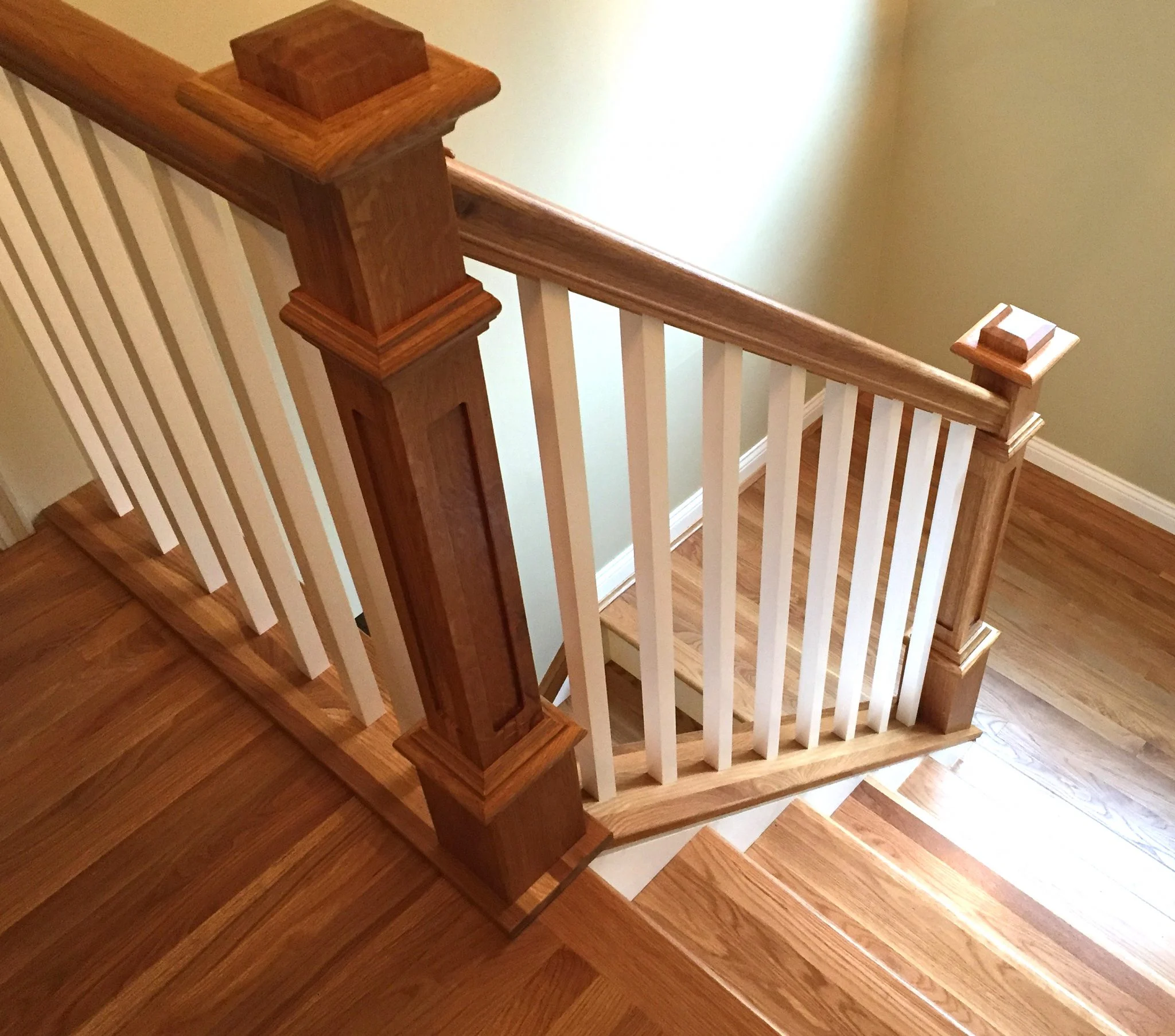
Using the same wood species and finish for both components can create continuity. This approach often works well when the staircase connects floors made from the same hardwood. Painted risers and balusters can add contrast while allowing the treads and rail to frame the staircase.
A contrasting handrail can also work. Dark walnut above lighter oak treads, for example, can establish the rail as a defined architectural line. The contrast should be repeated elsewhere through newel posts, cabinetry, door hardware, or other details so it looks intentional.
Before selecting either direction, consider how the staircase appears from adjoining rooms. A combination that looks appropriate from the lower landing may feel disconnected from the flooring or millwork upstairs.
How Do Wood Species Affect the Design?
Each hardwood species has its own grain, natural color, and response to stain. These characteristics remain visible after finishing and influence whether separate components appear related.
Common choices include:
- Red oak: Recognized for its open grain and warm reddish or pink undertones
- White oak: Often selected for its strong grain and neutral beige, tan, or brown coloring
- Maple: Features a fine grain and light natural appearance but can absorb stain unevenly
- Walnut: Provides naturally rich brown coloring and noticeable light-to-dark variation
- Cherry: Develops deeper, warmer coloring as it ages and receives light exposure
- Hickory: Displays strong grain and considerable contrast between lighter and darker areas
Using the same stain color on two different species does not guarantee that they will look alike. The underlying color and grain affect the finished result. Physical samples should be reviewed whenever mixed species are being considered.
How Should Color and Sheen Be Coordinated?
Color comparisons usually receive the most attention, but sheen can be just as important. A glossy handrail beside low-sheen treads may appear darker or more reflective even when the stain formulas are similar.
Design professionals should compare the color and sheen under the lighting planned for the property. Daylight, warm lamps, and cool LED lighting can change the perceived undertones of a finish.
Existing flooring creates another challenge. Wood may change color due to age, sunlight, cleaning methods, wear, and previous refinishing. A newly finished rail may coordinate with the floor without duplicating every section. In many cases, a related tone produces a more natural result than forcing a precise color match.
How Can Wood Rails Work With Metal Balusters?
Wood handrails are frequently paired with iron or steel balusters. This combination can suit transitional, industrial, farmhouse, and contemporary interiors depending on the rail profile and metal design.
Simple square balusters paired with a restrained wood profile can create a cleaner appearance. Scrolls, baskets, twists, and other decorative shapes tend to produce a more traditional result.
The finish of the metal should relate to other materials in the room. Black balusters may coordinate with window frames, lighting fixtures, or cabinet hardware. Bronze or warm metallic finishes can complement wood with amber or reddish undertones.
Connection details also matter. Shoes, fasteners, channels, and mounting hardware should support the intended appearance without distracting from the rail.
What Role Do Newel Posts Play?
Newel posts provide important support and establish visual stopping points at landings, turns, and stair openings. Their size and style should relate to the handrail profile.
A narrow, understated rail may look out of proportion with a large carved post. Likewise, a substantial handrail can overwhelm a slim newel. Reviewing full-size dimensions helps designers evaluate the relationship more accurately than catalog images alone.
The post does not always need to match the rail in every detail. A painted box newel with a stained cap and handrail can connect painted trim with natural wood treads. Repeating the same stain on the cap, rail, and treads keeps the combination visually organized.
How Should the Staircase Relate to Nearby Millwork?
A staircase may be visible beside kitchen cabinets, wall paneling, doors, built-ins, or ceiling beams. These materials should be considered before the handrail finish is approved.
Repeating every wood color is unnecessary and may make the interior feel overly uniform. Instead, identify the main wood tone and one supporting tone. The handrail can follow either, provided its relationship to the treads and posts remains clear.
Painted components can provide separation when several woods meet in one area. Painted risers, skirt boards, balusters, or posts can reduce the need to match multiple natural wood surfaces.
Why Do Profiles and Transitions Matter?
The handrail profile influences both appearance and installation. Straight sections may connect to fittings at landings, turns, ramps, and changes in elevation. These transitions must be planned before material is ordered.
Contractors should identify where the rail begins, ends, changes direction, meets a wall, or connects with a post. The selected profile needs compatible fittings for each condition. Field-fabricated transitions may be possible, but they require time, skilled labor, and careful finishing.
Local building requirements may also govern graspability, height, continuity, clearance, extensions, and returns. Project professionals should verify current requirements with the relevant authority before finalizing the railing package.
What Should Be Approved Before Ordering?
The final specification should identify:
- Wood species
- Handrail profile
- Stain color
- Finish sheen
- Required lengths
- Fittings and transitions
- Newel post connections
- Baluster compatibility
- Wall brackets or rosettes
- Jobsite finishing requirements
Physical samples should be reviewed alongside tread, flooring, and millwork samples whenever possible. Written approval of the selected finish can help reduce misunderstandings once production begins.
A coordinated staircase depends on deliberate relationships among the rail, treads, posts, balusters, flooring, and nearby millwork. To compare hardwood handrail profiles and prepare a complete material specification for an upcoming project, visit Wood Stair Co and review the available stair-part options.