



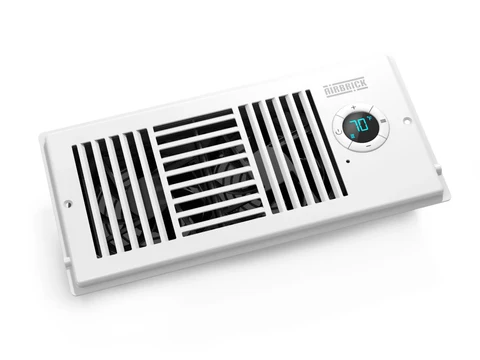
A bedroom that remains warm in summer or cold in winter can create frustration even when the central HVAC system appears to be working properly. In some homes, the issue involves weak airflow at a specific supply register rather than a complete heating or cooling failure. Register booster fans are designed to increase the movement of conditioned air from a floor or wall register into rooms that receive limited airflow.
Why Do Some Rooms Receive Less Conditioned Air?
Air does not always travel evenly through a duct system. Rooms farther from the air handler may receive less airflow than rooms located near it. Long duct runs, multiple bends, duct size, building layout, and closed interior doors can also affect air distribution.
Upper-floor bedrooms, home additions, finished basements, and rooms above garages are frequent trouble spots. These spaces may have different heating and cooling loads due to insulation levels, window exposure, ceiling height, or their position within the home.
Furniture and rugs can make the problem worse when they block a register. A dirty HVAC filter, closed damper, leaking duct, or obstructed return grille can also reduce airflow. These possible causes should be checked before adding an airflow accessory.
What Does a Register Booster Fan Do?
A register booster fan replaces or sits over an existing supply register. Its internal fans help draw more conditioned air from the duct and move it into the room.
Depending on the model, the unit may operate at a selected speed or respond automatically when it senses heated or cooled air. This local airflow support can make a room feel more comfortable without changing the temperature setting for the entire house.
The fan does not produce heated or cooled air. It assists with the delivery of air already supplied by the central HVAC system. This distinction is important when explaining the product to homeowners who may expect it to work like a portable heater or room air conditioner.
When Is a Booster Fan a Practical Choice?
A register-mounted fan may be worth considering when one or two rooms receive noticeably weaker airflow than other areas of the house. It can be particularly useful when the existing system operates normally and the affected register still receives conditioned air, but not enough to maintain the desired comfort level.
Common applications include:
- Second-floor bedrooms with long duct runs
- Home offices that become warm during working hours
- Finished rooms located over garages
- Additions connected to an existing duct system
- Rooms with greater sun exposure
- Spaces that are occupied only during certain parts of the day
For HVAC contractors, a booster fan can provide a focused answer when extensive duct modifications would be costly or impractical. For DIY homeowners, it can offer an accessible way to improve airflow after basic maintenance issues have been ruled out.
What Should Be Inspected Before Installation?
A weak register may indicate a larger HVAC or duct problem. Before recommending a fan, inspect the system for conditions that could restrict airflow.
Start by checking the air filter and confirming that supply and return grilles are open and unobstructed. Inspect accessible ducts for disconnections, crushed sections, loose joints, or visible air leakage. Contractors should also review damper positions and consider whether the system is properly balanced.
If several rooms have weak airflow, the concern may involve the blower, duct design, system sizing, or excessive static pressure. A register fan is intended for localized airflow support. It should not be used to conceal a failing HVAC component or an extensive distribution problem.
Which Features Matter When Selecting a Fan?
Register size is the first consideration. Measure the existing opening rather than relying only on the outer dimensions of the grille. The selected unit must fit the register location and installation style.
Noise also matters, especially in bedrooms, nurseries, and offices. Adjustable fan speeds give occupants more control over the balance between airflow and sound.
Automatic operation can reduce the need for manual adjustments. A temperature-sensing model can start when heated or cooled air reaches the register and stop when the HVAC cycle ends. Buyers should also consider control placement, power requirements, airflow direction, and how easily the grille can be removed for cleaning.
Where Should the Fan Be Installed?
The best location is typically the supply register serving the room with the comfort problem. The register should already produce some airflow when the central system runs. Installing a fan on a duct with little or no airflow is unlikely to correct the underlying issue.
Keep the unit clear of furniture, curtains, bedding, and rugs. Restricted discharge can reduce its effectiveness and create unnecessary noise. Users should periodically remove dust from the grille and fan area according to the product instructions.
A Focused Answer for Room-Level Airflow
Register booster fans can help improve comfort when conditioned air reaches a room but does not move from the register with enough force. Careful inspection, accurate measurement, and proper placement are essential to getting the expected result. Contractors and homeowners can visit Suncourt to review available airflow products and choose a register fan suited to the room, register size, and comfort concern.